


Face Forward Series: What Makes Someone a Good Candidate for Revision Rhinoplasty?

What Makes Someone a Good Candidate for Revision Rhinoplasty Surgery and Why?
A potentially good candidate for revision rhinoplasty must meet at a minimum the following four (4) criteria:
- Be fully healed from the previous rhinoplasty, which is at least twelve (12) months, sometimes longer.
- Have specific, identifiable functional and/or aesthetic concerns about their nose that have a reasonable chance of being addressed with revision surgery.
- Have realistic expectations about the healing process and what revision rhinoplasty can achieve, which is not necessarily everything primary rhinoplasty can achieve.
- Be psychologically ready for another rhinoplasty procedure.
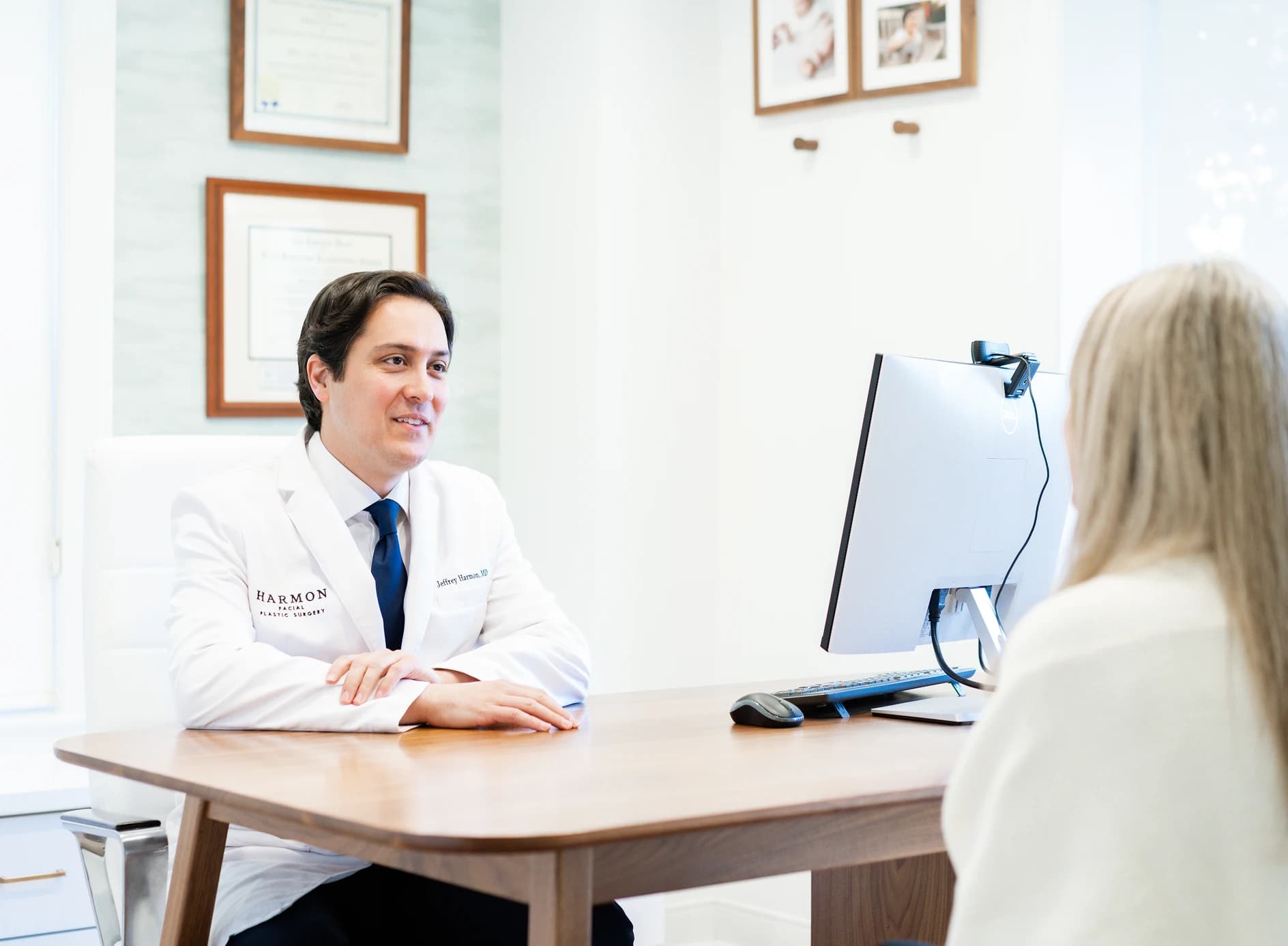
Revision rhinoplasty can be discussed and planned with Dr. Jeffrey Harmon in Cincinnati, Ohio once the above criteria have been met and there are no other factors that may preclude surgery.
What is a Revision Rhinoplasty?
A revision rhinoplasty is a surgical procedure in which patients undergo a rhinoplasty nose surgery to correct a feature of the nose they feel has been made worse with surgery or to further improve a feature they feel was inadequately or incompletely treated.
It is important to emphasize that just because someone is dissatisfied with the appearance and/or function of their nose after their initial operation does not mean they were "botched." While this term is not definable with any level of precision, Dr. Harmon feels very few patients have truly been botched secondary to the complete lack of skill and/or gross misjudgments of a surgeon. He feels it is more likely that:
- There is a mismatch between a patient’s aesthetic and/or functional desires and what a surgeon could reasonably achieve.
- The healing process proceeded unpredictably after surgery.
Why is Revision Rhinoplasty Different from Primary Rhinoplasty?
Revision rhinoplasty is less predictable intra-operatively and post-operatively due to:
- Scar tissue – Scar tissue blurs the delineation between tissue planes, making dissection more difficult. Scar tissue results in less robust blood flow to the healing surgical site, making the healing process potentially longer and less predictable.
- Altered cartilage – Rhinoplasty surgery often involves the removal, reorientation, and suturing of the nasal cartilages. Cartilage grafts are sometimes attached to the nasal tip and/or bridge. The specific alterations to nasal cartilage can affect what is achievable during revision rhinoplasty surgery.
The presence of scar tissue and altered cartilage affect each patient variably depending on the extent of the changes made previously.
What are the Most Common Reasons People Seek Revision Rhinoplasty Surgery?
The reasons patients seek revision surgery are highly variable and deeply personal to everyone. However, the most common reasons communicated to Dr. Harmon include, but are not limited to:
- Significant nasal tip asymmetry.
- Overly “pinched” nasal tip.
- Irregularities at the nasal bridge (dorsum). These irregularities include an inadequately reduced dorsal hump (pollybeak deformity), flattening of the dorsum (open roof deformity), and a collapsed nasal bridge (inverted V deformity).
- Problems breathing through the nose.
The above features can often be improved. There are some features, however, that cannot reasonably be improved with any level of confidence. They include, but are not limited to:
- Minor asymmetries at the nasal tip and/or bridge.
- Headaches or other sensory concerns following surgery.
- Sinus inflammation and/or infection, chronic or recurrent.
Dr. Jeffrey Harmon Evaluates Each Patient Thoroughly Prior to Considering Revision Rhinoplasty Surgery in Cincinnati, Ohio
Dr. Harmon evaluates each person in consultation based on factors that include, but are not limited to:
- Anatomy
- Surgical history
- Time since previous rhinoplasty surgery
- Aesthetic goals for surgery
- Functional goals for surgery
- Psychological readiness which is largely dependent on an honest self-assessment from the patient
There are Situations in Which Revision Rhinoplasty is Not Advisable
The situations in which revision rhinoplasty surgery may not be advisable include when:
- The risk of problems with healing outweighs the potential benefit of revision rhinoplasty.
- The concerns of a patient are unlikely to be improved with surgery.
- The patient is not psychologically prepared to undergo rhinoplasty surgery again.
Making the decision to advise against surgery is quite difficult. There are no guidelines recommending when to advise for or against revision rhinoplasty surgery. Facial plastic surgeons use their experience and expertise to make their best judgement thoughtfully and honestly.
FAQ
How long do I need to wait before undergoing revision rhinoplasty surgery?
While there is no firm timeline, in most cases patients need to wait at least twelve (12) months from their previous surgery before revision surgery is considered.
Can all rhinoplasty results be corrected?
No, unfortunately, not all concerns can be addressed with revision rhinoplasty surgery, as previously discussed.
Is revision rhinoplasty surgery riskier?
Revision rhinoplasty is not necessarily riskier in the hands of a skilled facial plastic surgeon with good judgement. However, it is not always entirely predictable what will be found under the skin during surgery. This can affect what is achievable and how a patient can heal post-operatively. Generally, there is a higher risk of problems with healing after revision rhinoplasty surgery when compared with primary rhinoplasty.
How many revision rhinoplasty procedures can I have?
There is no specific number a patient is “allowed” to undergo. The decision to proceed with revision rhinoplasty depends on multiple factors, as previously discussed. However, the more rhinoplasty procedures a patient undergoes, the less predictable the results are.
Disclaimer
This blog post is for educational purposes only and does not constitute direct medical advice. It is essential that you have a consultation with a qualified medical provider prior to considering any treatment. This will allow you the opportunity to discuss any potential benefits, risks, and alternatives to the treatment.
Book Your Consultation
Take the first step toward enhancing your natural beauty by scheduling a personalized consultation with Dr. Jeffrey Harmon. As a double board-certified facial plastic surgeon trained by the pioneer of the extended deep plane facelift, Dr. Harmon offers expert guidance and care. Whether you're considering surgical or non-surgical options, our team is here to support your journey to renewed confidence.